
ONLINE CHESS LESSONS FOR KIDS
Chess Lessons That Build More Than Chess Skill
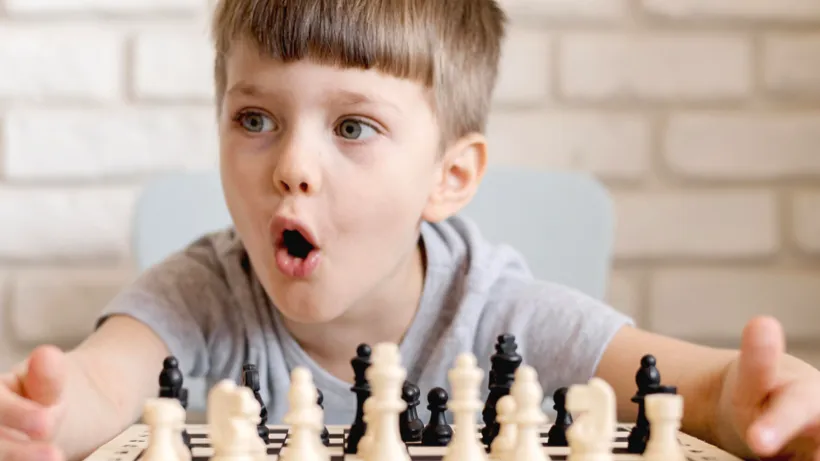
Life In Check helps children build a strong foundation in chess while deliberately developing the thinking habits behind the game.
Through every lesson, students practice thinking clearly, solving problems, making sound decisions, working through difficulty, and following through — useful skills they can carry far beyond the chessboard.
Beginners are ideal. No prior chess experience required!
Beginners are ideal.
No prior chess experience required!
Chess Is Full of Potential.
But the Game Doesn't Do the Teaching.
Parents often choose chess because they want their children to practice strategy, planning, problem-solving, good decision-making, and focus.
But those benefits do not happen automatically.
A child can learn the rules, memorize moves, and play game after game without doing much meaningful planning, reasoning, reflection, or independent problem-solving.
A child can learn chess without learning very much through chess.
When instruction stops at the pieces and moves, much of chess’s developmental potential can be left on the board.
Learning chess is different from learning through chess.
Life In Check is built around that distinction.
Skills That Outlast the Game
Your child will learn chess correctly from the ground up. But the lesson does not end when they understand how the pieces move.
Life In Check deliberately creates opportunities for children to practice thinking skills that matter beyond the board.
The goal is not perfection.
The goal is a child who becomes increasingly capable — and increasingly believes they are capable.
SKILLS YOUR CHILD WILL PRACTICE:
THINK CLEARLY
Learn to slow down, evaluate options, anticipate consequences, and explain the reasoning behind a decision.MAKE SOUND DECISIONS
Consider the possibilities, make a choice, experience the result, and learn from what happens next.WORK THROUGH DIFFICULTY
Practice patience, persistence, self-control, and the ability to keep thinking when the answer is not immediately obvious.BUILD EARNED CONFIDENCE
Give children repeated opportunities to experience one of the most powerful realizations they can have:
“I figured that out myself.”
SKILLS YOUR CHILD WILL PRACTICE:
THINK CLEARLY
Learn to slow down, evaluate options, anticipate consequences, and explain the reasoning behind a decision.MAKE SOUND DECISIONS
Consider the possibilities, make a choice, experience the result, and learn from what happens next.WORK THROUGH DIFFICULTY
Practice patience, persistence, self-control, and the ability to keep thinking when the answer is not immediately obvious.BUILD EARNED CONFIDENCE
Give children repeated opportunities to experience one of the most powerful realizations they can have:
“I figured that out myself.”
What Learning Through Chess Looks Like
Chess creates powerful opportunities for children to think.
Whether those opportunities become useful practice depends on how the game is taught.
At Life In Check, students aren’t merely given answers or taught moves to memorize.
They are deliberately asked to:
Evaluate
Choose
Anticipate
Explain their reasoning
Recognize consequences
Make decisions
Learn from mistakes
Try again
Evaluate
Choose
Anticipate
Explain their reasoning
Recognize consequences
Make decisions
Learn from mistakes
Try again
Chess is the environment. Thinking is the work.
Chess is the environment.
Thinking is the work.
And because chess is a game, children can put tremendous effort into that work while experiencing it as something challenging, competitive, and fun.
Chess is the instrument. The mind is the outcome.
Chess is the instrument.
The mind is the outcome.
New To Chess?
That's the best place to start!
Your child does not need previous chess experience to join Life In Check. In fact, beginners are ideal.
Starting from zero gives us the opportunity to build the foundation correctly from the beginning — piece by piece, rule by rule, and idea by idea — without first having to untangle incorrect rules, memorized moves, or habits learned informally.
Your child gets to learn chess correctly while learning how to think through the game from Day One.
Already Plays Chess?
Life In Check is likely still a great fit!
We are not an elite tournament academy built around ratings, trophies, or producing titled players. Our focus is helping kids build strong fundamentals and learn how to think through the game.
Experienced players join the call for a specially designed live assessment, so we can understand what they truly know, identify any gaps in their foundation, and determine where Life In Check can help them grow as both chess players and thinkers.
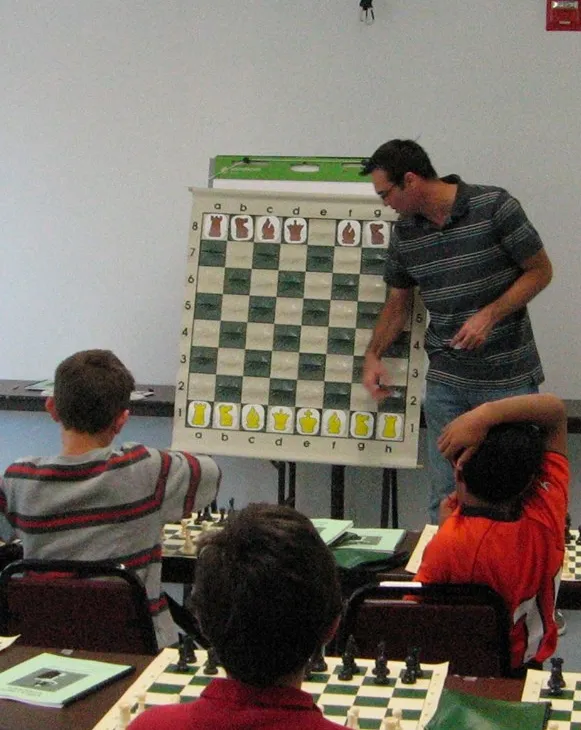
You Want Your Child's Time to Count
You are not simply looking for another way to fill an hour. You want your child engaged in something they enjoy and something worthwhile.
Life In Check was created from 13 years of experience teaching chess to children and seeing firsthand that knowing how to play the game does not automatically mean a child is learning everything the game has the potential to teach.
That experience led to a proprietary instructional approach designed to do both:
teach children chess correctly and deliberately teach them through chess.
We do not claim chess magically makes children smarter, promise instant transformation, nor pretend every child is a future Grandmaster.
We create structured opportunities for children to think, decide, struggle, solve, learn, and improve — and we let those repetitions do their work.
13 Years
Teaching children chess
300+
Students and families served
Proprietary Curriculum
Built to teach chess and develop thinking habits
What Parents Have Said

My girls knew nothing about chess when they started taking your classes. Now they play together every day. Thank you, Coach Rob!
Carrie Vawter-Yousfi

Coach Rob, your patience and simple approach to explaining the game has kept our son excited and interested! He's learning so much. Thank you!
Jeff Niles
Bryan said you were the best coach ever, and I have to agree! I even learned chess while you were teaching him!
Melynda Alger
Getting Started Is Simple
01
Schedule Your Free Call
Tell us about your child, what sparked their interest in chess, and any previous experience they may have.
02
Start at the Right Level
Beginners start from the ground up. Experienced players join the call for a brief live assessment so we can identify the right starting point.
03
Start Learning Through Chess
Your child learns the game while practicing how to think, make decisions, solve problems, work through difficulty, and figure things out independently.
Your Child Can Learn Chess. They Can Also Learn From It.
You want your child involved in activities that are fun, engaging, and worth the time you invest in them. When an activity can also help them become more thoughtful, confident, persistent, and independent, that time becomes even more valuable.
Chess has enormous potential. But simply putting pieces on a board does not automatically teach a child how to think. Children can memorize rules and moves without learning to evaluate possibilities, explain their reasoning, make thoughtful decisions, or work through difficulty. Learning chess and learning through chess are not the same thing.
Life In Check was designed to bridge that gap.
Our students learn the fundamentals of chess while being deliberately challenged to think through the situations the game creates. They make choices. They experience consequences. They explain ideas. They solve problems. They make mistakes and try again.
And because all of this takes place inside a game, the child experiences something very different from another lecture about discipline, judgment, or persistence.
They experience chess.
They experience challenge.
They experience improvement.
And increasingly, they experience the satisfaction of being able to say: “I can figure this out.”
If your child is new to chess, this is an ideal time to begin. If they already play chess, we’ll include a brief live assessment during your call to understand their foundation and determine whether Life In Check is the right fit.
Answers to Common Questions
Does my child need to know how to play chess?
No. In fact, beginners are ideal for Life In Check. Starting from zero allows us to build a strong foundation correctly from the beginning — piece by piece, rule by rule, and idea by idea.
What if my child already plays chess?
They're likely still a great fit. However, Life In Check is not an elite academy focused on ratings, trophies, or producing titled players. Experienced players are assessed individually so we can understand what they truly know, identify any gaps in their foundation, and determine the right place for them to begin.
Does my child need to join the free call?
If your child already plays chess, yes. We’ll have them join part of the call for a brief live assessment of their current understanding and foundation.
If your child is a complete beginner, there is no chess assessment to perform. Of course, if you'd like your child to be on the call, we're all for it regardless of their chess experience!
Is Life In Check designed for serious tournament players?
Not primarily. Our focus is teaching strong chess fundamentals while deliberately using the game to help children practice thinking, decision-making, persistence, and independent problem-solving. Families whose main goal is elite tournament preparation, rapid rating growth, or a path toward chess titles will likely be better served by a specialist tournament coach.
Is this a life-skills class disguised as chess?
No. Your child is learning chess.
The broader developmental value comes from how chess is taught. Students are challenged to think, evaluate options, explain ideas, make decisions, experience consequences, learn from mistakes, and try again. Your child experiences a game; the useful thinking practice happens through the experience.
Does chess automatically teach critical thinking?
Chess creates excellent opportunities for children to practice thinking, planning, judgment, and problem-solving. But simply learning the rules or playing games does not guarantee those skills are being developed. Deliberate instruction determines whether the opportunity is actually used.
Give Your Child More Than Chess Lessons.
Help your child build a strong foundation in chess while practicing useful skills that can serve them far beyond the board.
Give them opportunities to think, make decisions, work through difficulty, figure things out — and to increasingly believe:
"I can do this."
We’ll talk about your child, their experience with chess, and whether Life In Check is the right fit.

Chess is the instrument. The mind is the outcome.
Chess is the instrument.
The mind is the outcome.